A Guide to Leopards, the Kruger’s Most Elusive Big 5 Member
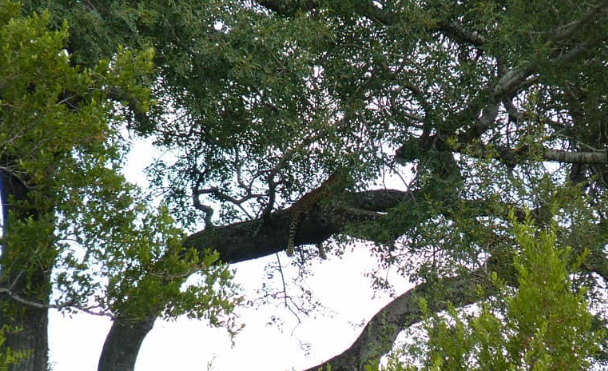
While a lion can nap beside the road and a buffalo can give you an intense stare while you snap away as many photos as you can take, a leopard can be sitting in a tree 10 metres and everyone drives past.
In the Kruger National Park, the leopard is the most exciting animal to spot because it is such a rarity. Leopards are well known to be masters of staying out of sight, moving unseen through the bush, and appearing for just long enough to leave everyone wondering how they were missed.
Why are leopards so difficult to spot in the Kruger?
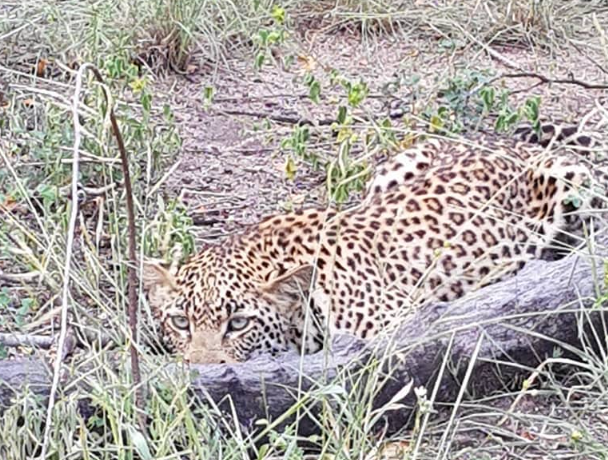
Leopards are difficult to spot because they are solitary, secretive cats with spotted coats that blend exceptionally well into woodland, grass and dappled shade.
The Kruger National Park covers approximately 19 485 square kilometres, giving these cats plenty of habitat in which to keep their private lives private.
And their behaviour adds to the difficulty of the search:
| Leopard trait | What to look for |
| Mostly solitary | A single leopard is more common than a group |
| Excellent climber | Look into trees, especially around likely kills |
| Powerful night vision | Early morning and late afternoon can be productive |
| Spotted coat | Shadows and vegetation provide superb camouflage |
| Territorial | Individuals use scent and other markings to communicate |
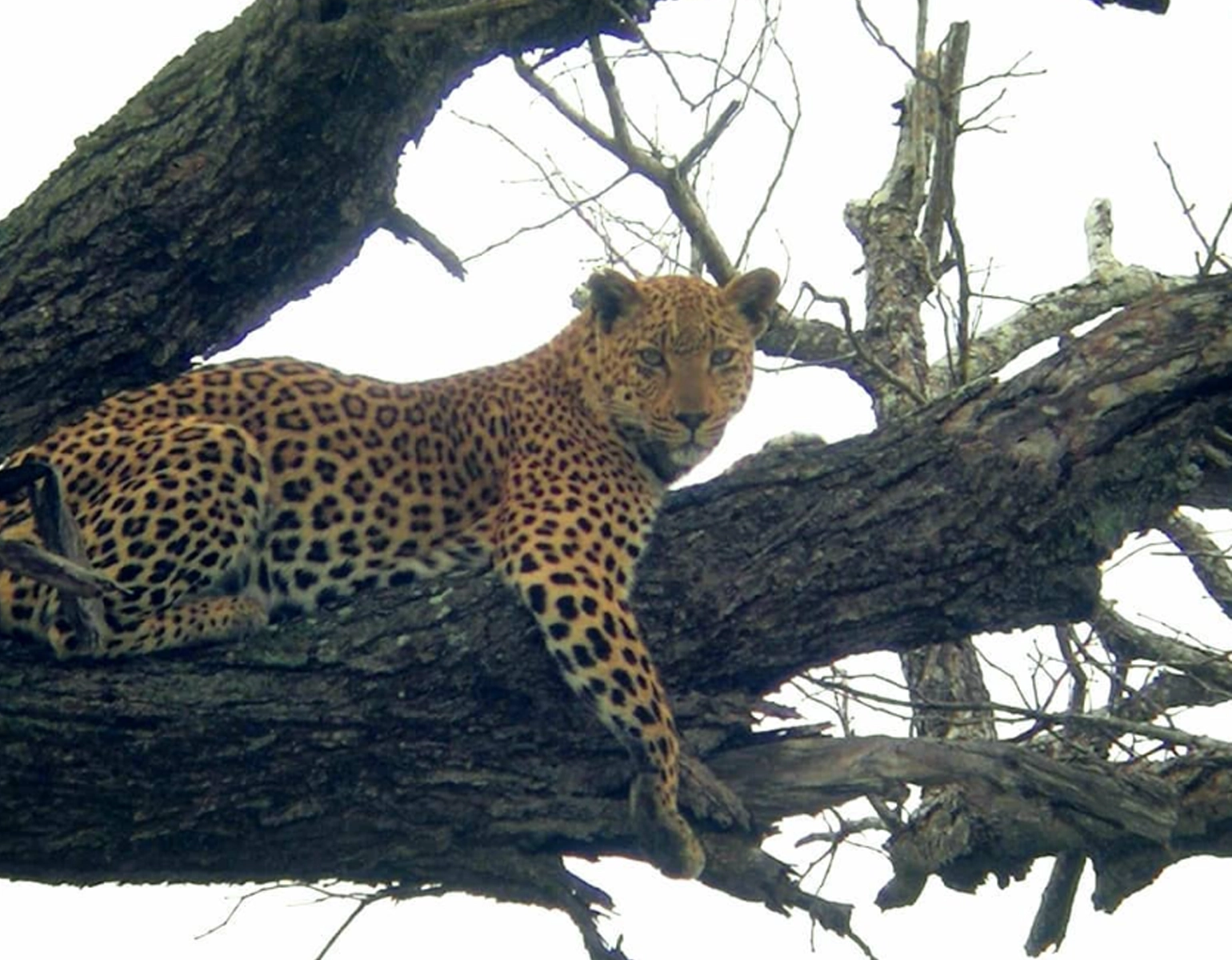
A leopard resting in a tree is one of the Kruger’s most memorable sightings, particularly when its tail hangs lazily over a branch or when it has a kill.
Leopards will often carry prey high up into trees, where the carcass is harder for competing predators to steal. Travelling with a guide will give you the best chances of seeing a leopard, as they will spend the game drive checking branches, forked trunks and shaded spots.
A guide will also keep an eye out for fresh tracks, they’ll listen for alarm calls from impala and other antelope, unusual bird activity, drag marks and a suspicious carcass can all add pieces to the puzzle.
Leopards are built for a solitary life
The leopard, Panthera pardus, is a highly adaptable predator found across parts of Africa and Asia.
Female leopards generally raise cubs alone and the cubs will be dependent on their mother for months, learning essential skills such as hunting and avoiding larger predators.
That independence comes with a price.
Leopards compete with lions, hyenas and other predators for food, while habitat loss, prey depletion and conflict with people remain significant conservation concerns in parts of their range. For this reason, leopards are a vulnerable species, not just in Africa but globally.
How to improve your chances of seeing a leopard
Although we’d love to tell you that you’ll have a good chance of seeing a leopard while on a safari, these cats are sometimes the only wildlife of the Big 5 that you won’t see on a safari. The more days you spend in the park, the better, and it also helps if you are patient and travel in the best areas of the park.
To improve your chances of seeing a leopard, this is what you should do:
Having a knowledgeable guide will add enormous value to your trip and could be the difference between seeing a leopard and driving past one.
For guests travelling with Elephant Herd Safaris, the time spent exploring the Kruger is as much about seeing the Big 5 as it is about learning how to read the bush, looking for the subtle signs and appreciating each and every animal you come across, even if you miss the leopard.